Forum Highlights
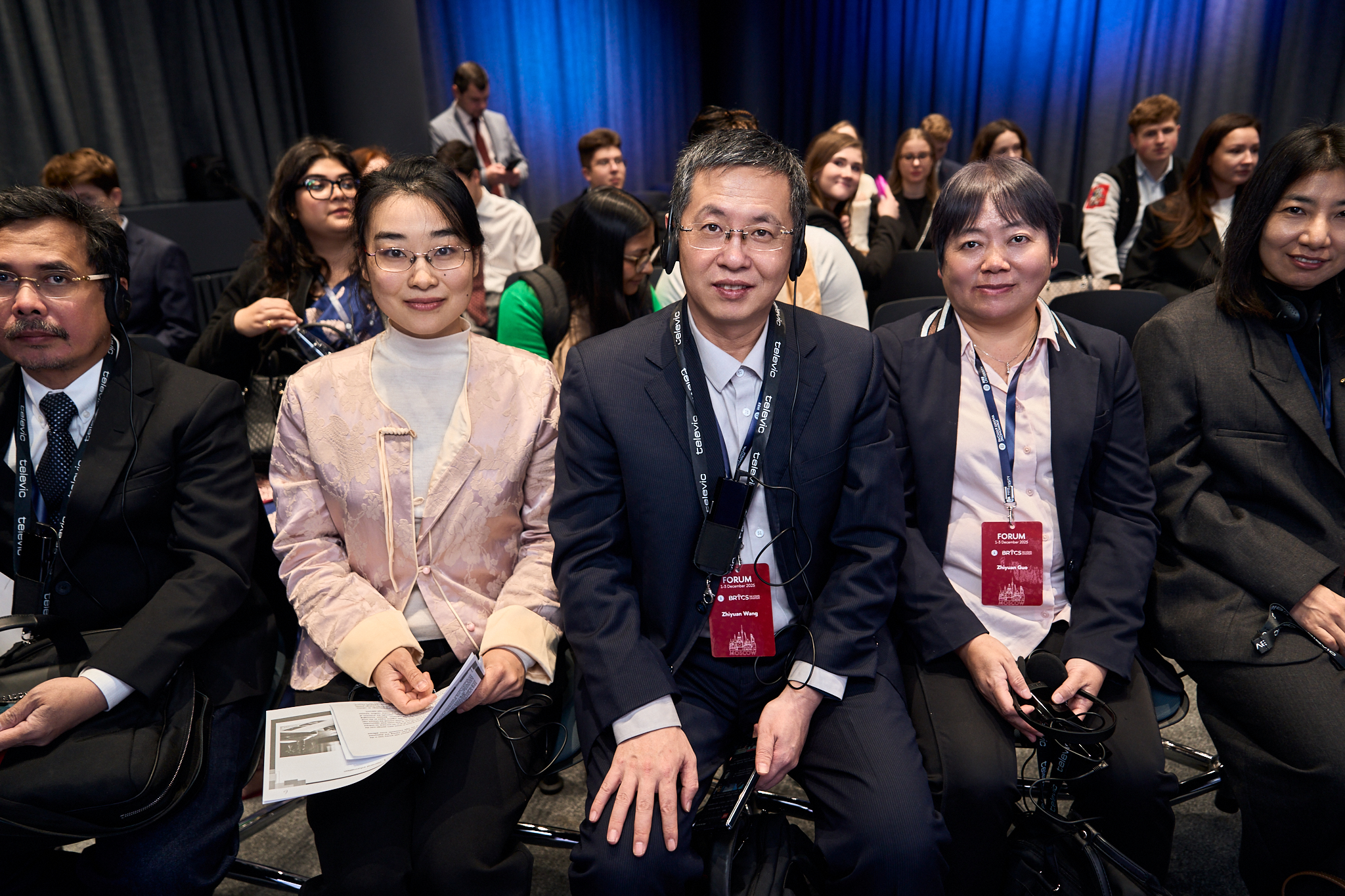
In December 2025, the National Research University Higher School of Economics (HSE University) hosted the first Forum of the BRICS Law Schools Consortium, organized by the HSE Faculty of Law. The Forum brought together 42 international delegates (including 10 deans) from 14 universities representing Belarus, China, South Africa, India, and Indonesia. The Forum featured expert discussions, the signing of the Memorandum of Intent, and the adoption of decisions on the future areas of activity of the BRICS Law Schools Consortium, which was established on the initiative of the HSE Faculty of Law.

Opening the Forum, HSE Vice Rector Alexey Koshel noted: “We are facing large-scale challenges — the harmonization of legal systems in the context of the significant expansion of the BRICS format, as well as the transformation of the economy driven by the introduction of modern innovations. All this poses new challenges for our academic and educational communities in developing scientifically grounded concepts for the development of the state and law. This is followed by the goal of training a new generation of lawyers capable of working in a multipolar world and, of course, by the need to coordinate the efforts of our academic and educational teams in preparing the lawyers of the future. This clearly demonstrates the importance of maintaining and developing our dialogue — a dialogue among leaders of legal education who are ready to jointly seek answers to the challenges of our time.”
The Forum provides an opportunity to exchange best practices in legal education, outline joint research projects that may emerge from the activities of the Consortium’s Working Groups, and “build long-term partnerships between partner universities,” emphasized Vadim Vinogradov, Dean of the HSE Faculty of Law.

As part of the Forum, Vadim Vinogradov and Zhiyuan Wang, Dean of the School of Criminal Justice at the China University of Political Science and Law, signed a Memorandum of Intent aimed at expanding opportunities for student and faculty exchanges, as well as for joint research in the field of law.
During the session “National Symbols: Cultural Influence and Legal Regulation in the BRICS Countries.”, experts agreed that the challenges of globalization and digitalization make a profound reflection on historical heritage particularly relevant.
“National symbols constitute a cultural code and a visual carrier of collective memory. They embody a nation’s understanding of its statehood, unity, and dignity. Today, the role of the state is to act as a guardian of the country’s and society’s visual identity.”, emphasized Alexey Koshel in his speech.
Albina Gadzhieva
Albina Gadzhieva, First Deputy Dean of the HSE Faculty of Law, the views of the Forum participants converge on the understanding that national symbols are an integral part of the cultural code reflecting historical memory, traditional spiritual and moral values, and the identity of nations. National symbols not only remain relevant but also serve as one of the key factors in shaping civic identity. “This undoubtedly requires new legal forms both to support and promote the use of national symbols and to ensure their protection.” Albina Gadzhieva noted.
Within the session “Legal Education in the BRICS Countries: Perspectives and Challenges in XXI Century” members of the international delegations presented innovative approaches to legal education in their countries, including the use of digital and AI technologies in the educational process. The experience shared during the session may be applied in the development of legal education systems both in Russia and other BRICS countries.

One of the key events of the Forum was the world’s first BRICS Lex Model, a competitive simulation that brought together students, faculty members, and experts to discuss issues of law and public administration in the BRICS countries. Eleven teams from BRICS states participated in a simulated international diplomatic conference on the adoption of a new international treaty on the promotion and protection of foreign investments. As a result, the teams developed draft international investment agreements focused on investment protection within the BRICS countries.
Forum participants, along with faculty members and students of the HSE Faculty of Law and activists of the Moscow Youth Parliament, visited the Moscow Situational Center. There, Vladislav Shishmarev, Deputy Head of the Moscow Department of Information Technologies, spoke about the development of digitalization in the capital, the implementation of information technologies in the electoral process, and the use of AI in the civil service system. Marina Prozorova, Deputy Head of the Moscow Department of Territorial Executive Authorities, paid special attention to youth participation in the development of urban projects.

A special Forum session dedicated to the outcomes of the Consortium’s working groups was held at the Situational Center. The Center’s advanced technologies ensured seamless synchronization of presentations by both on-site participants and those who joined online, representing partner universities of the Consortium from Brazil, India, China, and Thailand. The working groups presented the results of joint research in the fields of AI, environmental law, international law, digital technologies, and commercial law. The visit to the Situational Center concluded with a guided tour of the Moscow Museum and the Moscow Government building.
A guided tour dedicated to the activities of the lower chamber of parliament, as well as its organizational and legislative procedures, was organized for Forum participants at the State Duma of the Russian Federation.
Alexander Larichev
Over the three days of the Forum, the leadership of the HSE Faculty of Law held a series of meetings with delegations from universities in China, India, Indonesia, South Africa, and Belarus. The Forum served not only as an effective platform for developing a common framework for cooperation among Consortium members but also for strengthening bilateral ties between the HSE Faculty of Law and its partner universities.
“In addition to the Faculty of Law’s strong position in academic rankings, colleagues from BRICS universities show great interest in our advanced experience in conducting interdisciplinary research, including in the regulation of the digital environment, bioethics, and other innovative areas. In this regard, we plan to develop concrete formats for scientific cooperation with leading universities from friendly jurisdictions,” noted Alexander Larichev, Deputy Dean for Research at the HSE Faculty of Law.
Participants
- Universities from BRICS countries
- Representatives from the legislative bodies of the Russian Federation
- Private legal companies based in BRICS countries
- Members of the diplomatic corps of the BRICS countries; Ministry of Foreign Affairs of the Russian Federation