About the Laboratory
The Laboratory for the Study of Public Interest Protection under Economic Sanctions at HSE University’s Faculty of Law focuses primarily on research and teaching issues concerning the legal protection of Russian interests within the WTO, general international law, Eurasian Economic Union law, and Russian domestic law.
The Laboratory’s work will lead to the development of a new master’s programme in International Trade Law, Finance, and Economic Integration; development of new materials for the following courses: WTO Law, International Dispute Resolution, and Modern Problems of International Economic Law, as well as participation in the ELSA Moot Court Competition on WTO Law and the Philip C. Jessup International Law Moot Court Competition.

Laboratory for the Study of Public Interest Protection under Economic Sanctions invites you to a research seminar to be held on December 23 at 13:00, topic: "Claims for Unethical dealing: the court will never shake your hand if it is not clean"
The clean hands doctrine is becoming more and more popular in interstate dispute settlement, but is everything so obvious with its application? During this lecture, we will discuss the clean hands doctrine from a practical perspective, analyze current examples of its application, pitfalls, and non-obvious advantages.
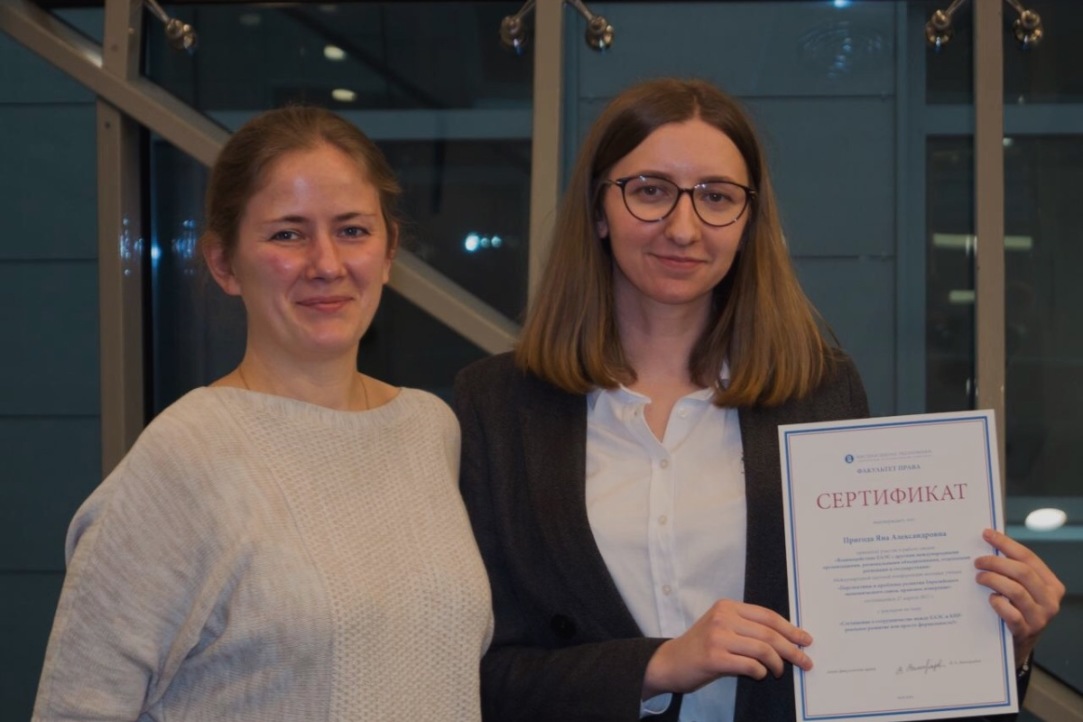
Congrats on the victory!
Yana Prigoda, a trainee researcher at the NUL, took first place at the International Scientific Conference of Young Scientists "Prospects and Problems of Development of the Eurasian Economic Union: a Legal Dimension".
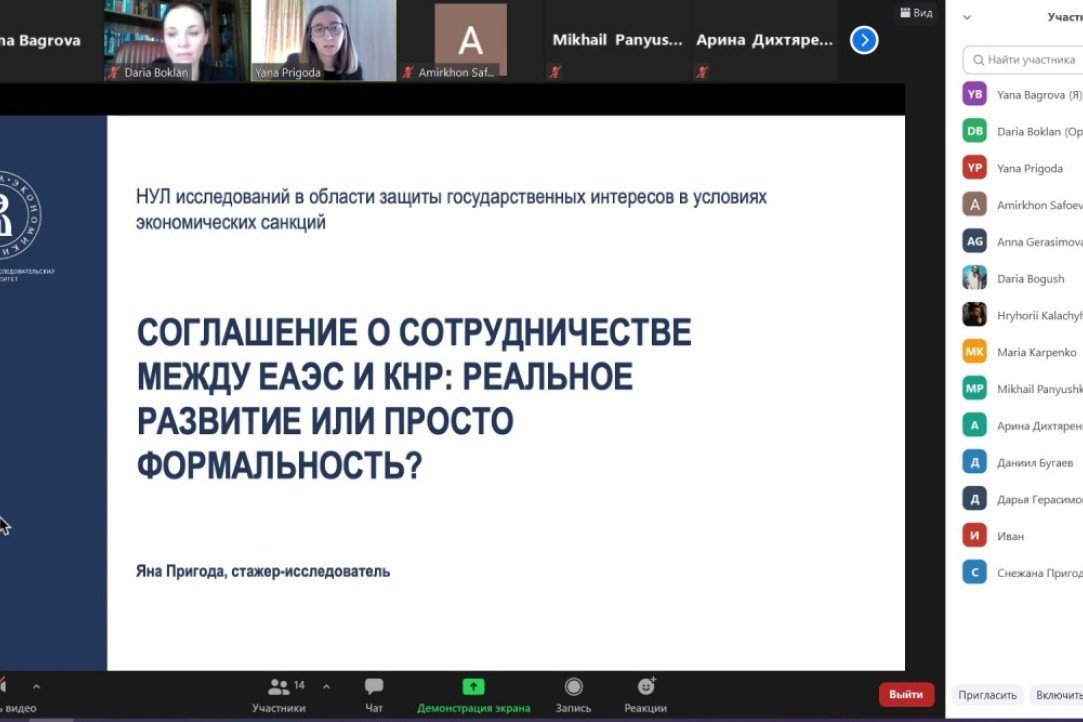
The seminar of the Laboratory. Press-release
On 22 April 2021, a regular seminar on "Cooperation Agreement between the EAEU and the People's Republic of China: Real development or just a formality" was held on the basis of the Laboratory research in the field of protecting state interests in the context of economic sanctions.
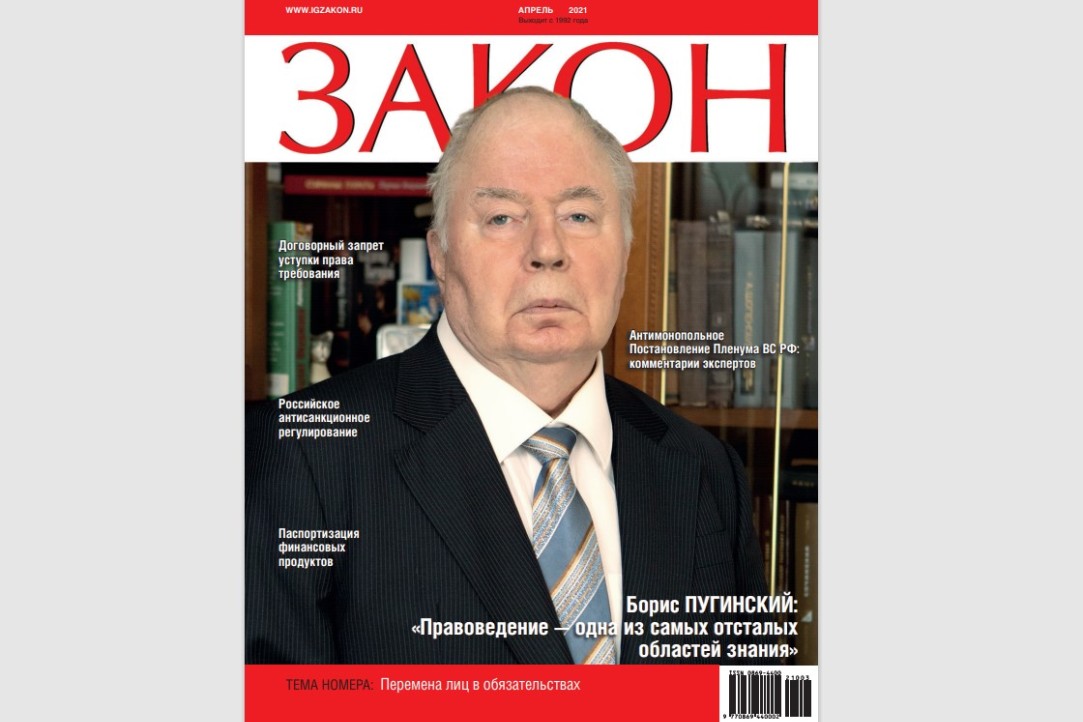
Congratulations on a new publication!
An article of the researcher and trainee researchers of the NUL is published in the March issue of the journal "Law".
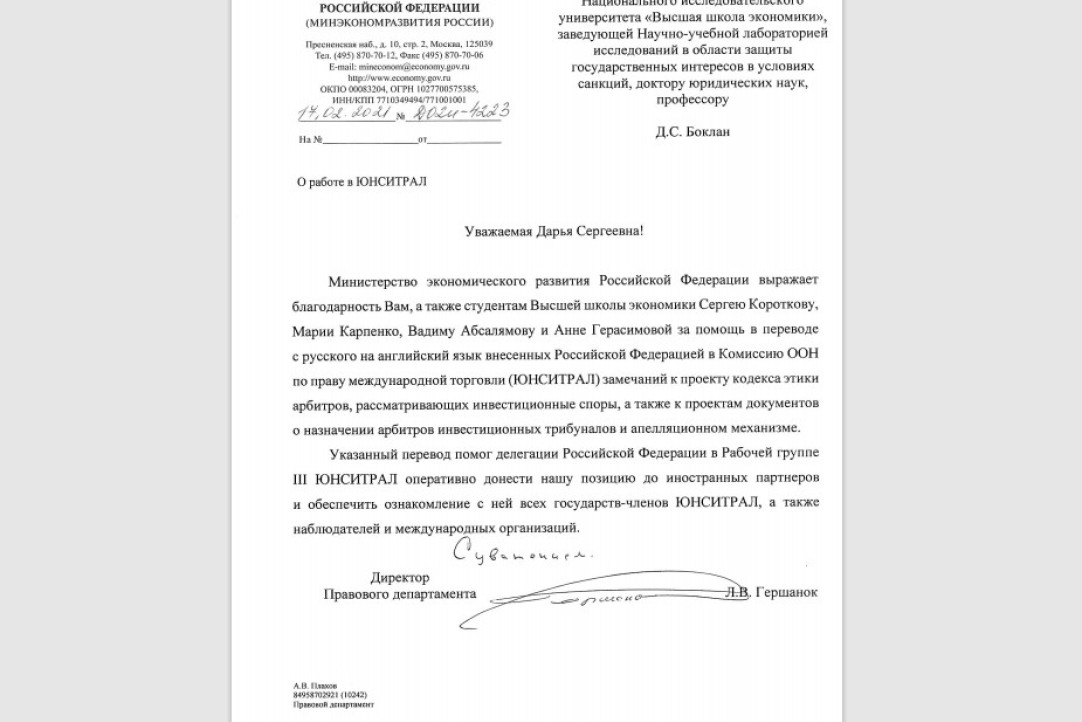
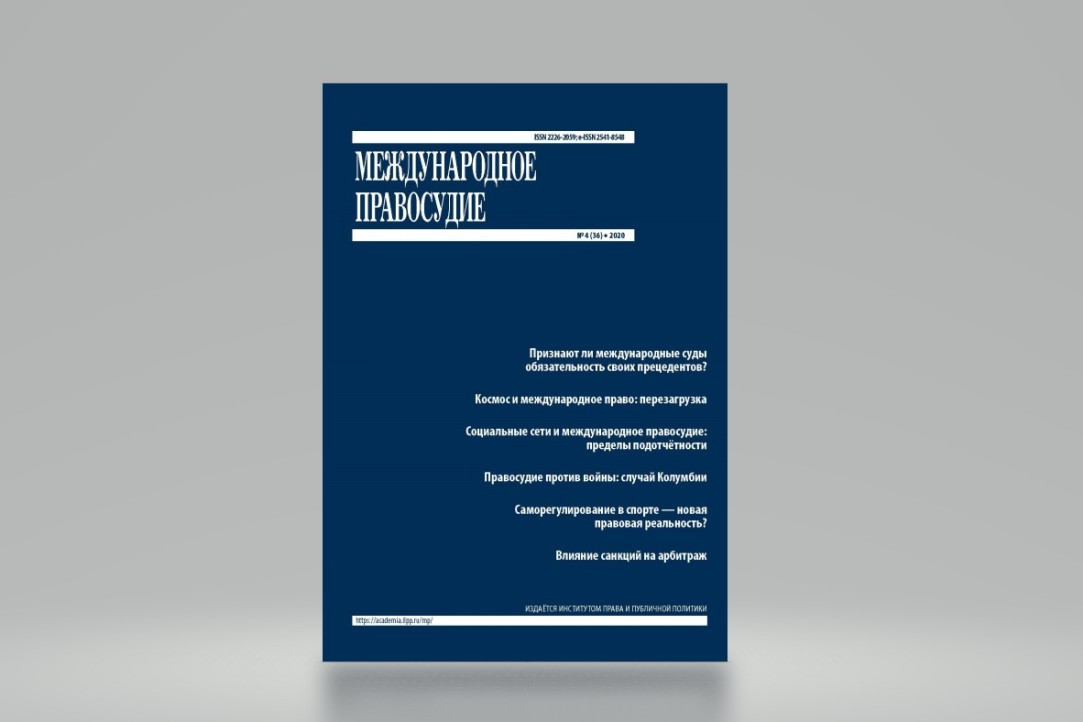
Congratulations on the new publication!
In issue № 4 of the journal "International Justice", the article was published by the research associate V. V. Starzhenetskiy and S. Ochirova on "The impact of sanctions on the resolution of foreign economic disputes: the preservation of the status quo or the search for alternative jurisdictions?"